How to choose a production line that matches your output, labor, site, and growth plan.
Choosing a block making machine is not simply a choice between a small machine and a large machine. It is a production-system decision. The correct level of automation depends on the blocks you plan to sell, the output your market can absorb, the labor available locally, the space and utilities at your site, and the amount of automation you can operate and maintain.
FUREIN currently groups its main block machine range into manual, semi-automatic, and fully automatic models. This guide explains what those categories mean, how the production flow changes, and which FUREIN models belong to each group.
If you want to know about block making machine, please keep reading:
Semi Automatic Block Production Line Selection Guide: QT3-20, QT4-25 and QT4-26
Fully Automatic Hydraulic Block Production Line Selection Guide
What does manual, semi-automatic, and fully automatic block machine mean?
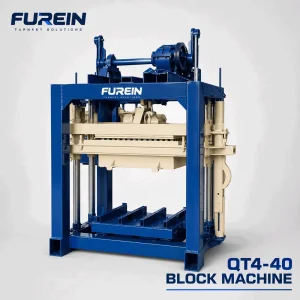
Manual block making machine
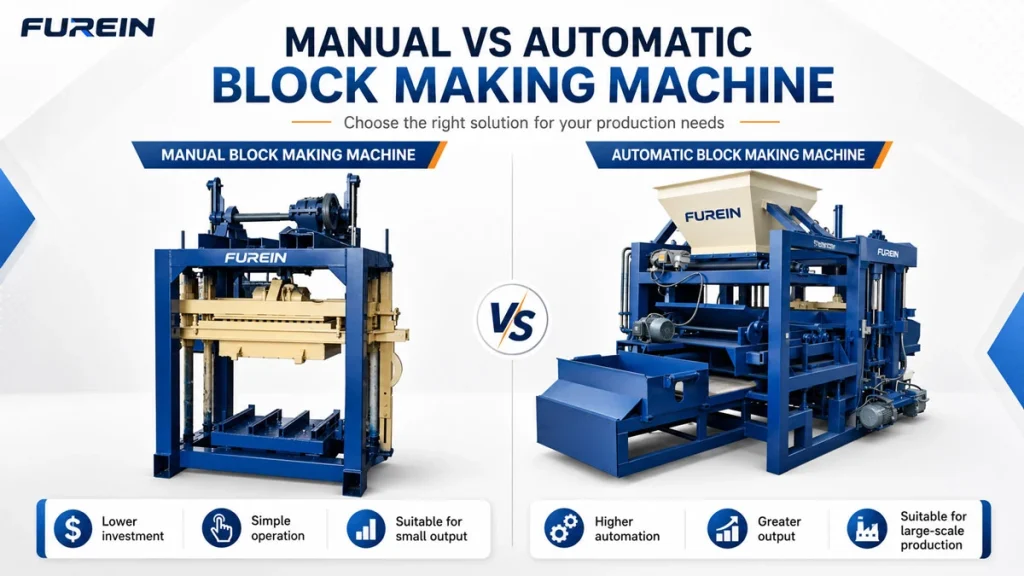
A manual block machine keeps the forming equipment relatively simple and relies more heavily on workers for feeding, pallet movement, block transfer, and stacking. A mixer and conveyor can still be added, so “manual” does not necessarily mean that every step is done by hand.
Manual equipment is generally most suitable for low-volume projects, new local markets, or buyers who prioritize straightforward operation and lower entry cost over continuous automated flow.
Semi-automatic block production line
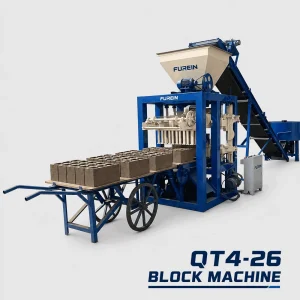
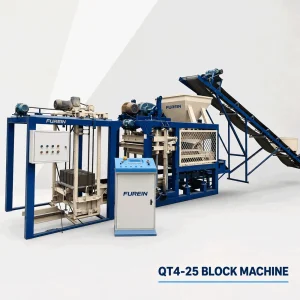
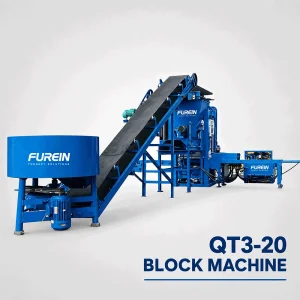
A semi-automatic block production line automates the main forming cycle while workers continue to support one or more upstream or downstream steps. Depending on the configuration, mixing and feeding may be mechanized while pallet handling, wet-block transfer, curing movement, or stacking remains manual.
This semi-automatic block production line can be a practical middle ground: the main machine delivers a repeatable forming cycle, but the project does not need the full investment or site infrastructure of a highly integrated line.
Fully automatic block production line
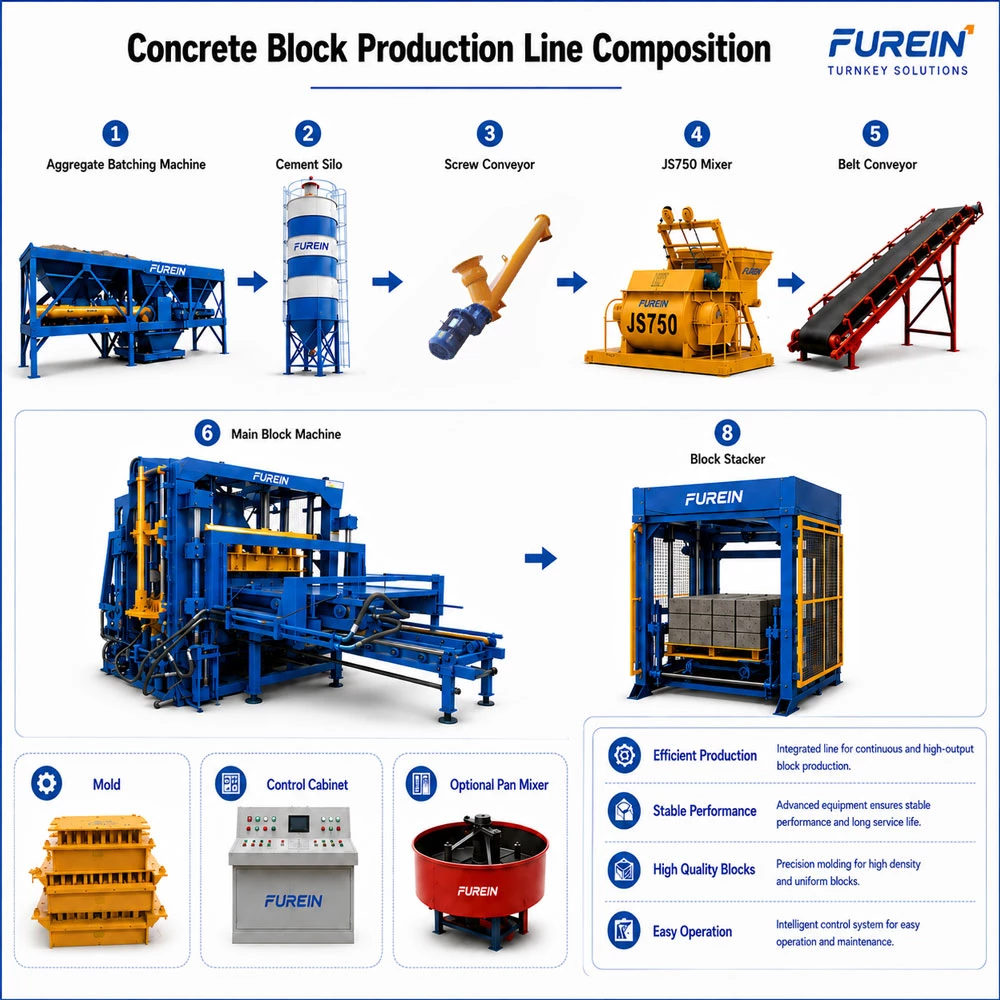
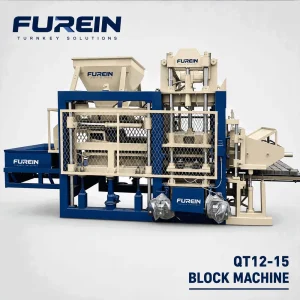
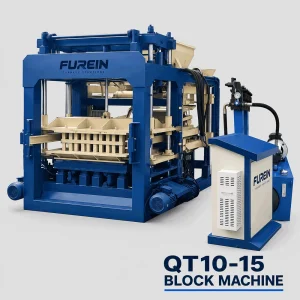
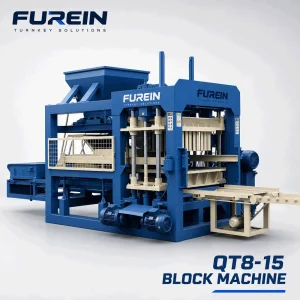
A fully automatic block production line connects more of the production process through PLC control and coordinated equipment. Batching, mixing, material conveying, pallet feeding, forming, block discharge, and stacking can be integrated to different degrees.
The exact meaning of “fully automatic” should always be checked against the equipment list. A fully automatic forming machine does not automatically mean that the quotation includes a cement silo, color feeder, cubing line, loader, curing system, or every other auxiliary machine.
Quick comparison: manual vs automatic block making machine
| Factor | Manual | Semi-automatic | Fully automatic |
|---|---|---|---|
| Main priority | Lower entry cost and simpler operation | Balance of investment and mechanized forming | Integrated commercial production |
| Material handling | Mostly manual or separately assisted | Mixed manual and mechanized steps | More steps can be linked automatically |
| Production control | Basic electrical control | Automatic forming cycle with manual support | PLC and touch-screen control on the main models |
| Typical project | Local or low-volume production | Small and medium block plants | Medium and large commercial plants |
| Expansion | Auxiliary equipment can be added | Batching, feeding, and handling can be upgraded | Can be extended with silos, color systems, stacking, and cubing |
FUREIN models by automation level
| Automation level | FUREIN models | General positioning |
|---|---|---|
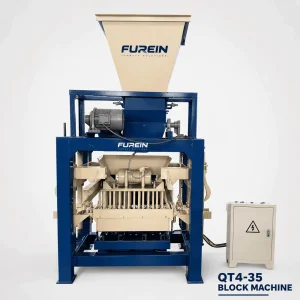
| Manual | QT4-35, QT4-40 | Low-investment and small-scale production |
| Semi-automatic | QT3-20, QT4-25, QT4-26 | Small to medium production with more manual handling |
| Fully automatic | QT4-15, QT5-15, QT6-15, QT8-15, QT10-15, QT12-15 | Growing, medium, and industrial production projects |
| Typical project | Local or low-volume production | Small and medium block plants |
| Expansion | Auxiliary equipment can be added | Batching, feeding, and handling can be upgraded |
6 questions to answer before selecting a block machine
1. Which blocks will you produce by block making machine?
Start with your block making machine, not the block machine. Hollow blocks, solid bricks, paving blocks, curbstones, and grass pavers require different molds. Block size also changes the number of pieces produced per mold, so a capacity figure is meaningful only when the block dimensions and working time are stated.
If you plan to make colored paving products, confirm whether the proposed block production line includes a face-mix or color-material feeding system. A change of mold alone does not provide a separate colored surface layer.
2. What block making machine output does the market actually require?
Estimate sales by block type and by shift. Buying a block making line that is too small can create delivery bottlenecks, but buying excessive capacity can tie up capital in equipment, power infrastructure, pallets, curing space, and material inventory.
Ask every block making machine supplier to show capacity using the same block dimensions, the same number of pieces per mold, the same molding cycle, and the same working hours.
3. How much labor is available for block making machine?
Automation block machine can reduce repetitive handling, but it does not remove every job. A concrete block making plant still needs people for control, raw-material loading, forklift operation, curing-yard organization, quality checks, mold changes, and maintenance. The required number of operators for each FUREIN configuration is currently 3-4 people.
4. What are the site and utility limits for block macking machine?
Check more than the dimensions of the main block machine. The block making site must also accommodate aggregate bins, the mixer, conveyors, pallet circulation, wet-block transfer, curing, finished-product storage, forklifts, and truck access.
Confirm the local voltage and frequency, available transformer capacity, water supply, drainage, floor loading, foundation requirements, workshop height, and outdoor curing area before approving a complete block production line layout.
5. Which block making machine is standard and which is optional?
Two quotations for the same block machine can describe very different production lines. Compare the batching system, mixer, conveyors, molds, pallets, pallet feeder, stacker, color system, cement silo, screw conveyor, scales, tools, and commissioning service line by line. FUREIN Block prepares block production line configurations by model and project.
Common purchasing mistakes for block making machine?
• Comparing block machine prices without comparing the complete concrete block making plant scope.
• Using a capacity figure that does not identify the block size or shift length.
• Selecting automation before checking local labor, maintenance capability, and power supply.
• Planning only for the main machine and forgetting curing and storage space.
• Assuming every mold can make a colored two-layer paver without a face-mix system.
• Ignoring pallets, trolleys, spare parts, installation, and operator training in the project budget.
How FUREIN can prepare a suitable block making machine proposal?
To prepare a model recommendation and block making line configuration, FUREIN Block needs the target block drawings or dimensions, required daily output, planned working hours, raw materials, site layout, local power standard, preferred automation level, and budget range.
With those inputs, the block making machine proposal can separate the main machine from standard auxiliary equipment, optional upgrades, pallets, molds, installation requirements, and future expansion items.
Choose a manual block making plant when low initial investment and simple operation matter most. Choose a semi-automatic block making machine production line when you need higher output but can still use workers for material handling and block transfer. Choose a fully automatic concrete blocking making machine when stable commercial production, repeatable process control, and future line integration are the priorities.