
If you plan to produce concrete hollow blocks, the first question should not be “Which machine is the biggest?” or “Which machine makes the most blocks per cycle?”
The right hollow block making machine depends first on the hollow block you want to sell, your local raw materials, required daily output, labor situation and available investment.
For a small block factory, a mixer and a simple hollow block machine may already be enough to start production. For a commercial factory with stable demand, the same production process can be expanded with automatic batching, mixing, conveying, block forming and handling equipment.
Before FUREIN BLOCK recommends a machine, three pieces of information are especially useful: your hollow block size + Required daily output + Available raw materials.
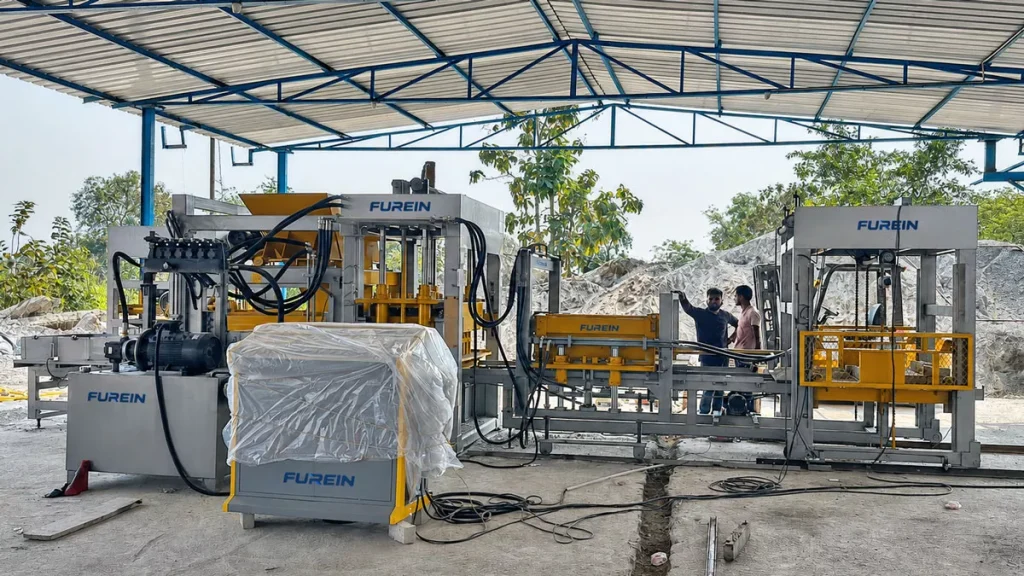
What Is a Hollow Block Making Machine?
A hollow block making machine forms semi-dry concrete material into hollow concrete blocks through mold filling, vibration, compaction and demolding. The mold determines the basic shape and dimensions of the block, while the machine provides the feeding, vibration and compaction required for stable forming.
A hollow block machine is also not necessarily limited to one type of block. Depending on the machine structure and suitable mold design, the same block machine may also be used to produce products such as solid blocks, paving blocks or interlocking blocks by changing molds.
If you plan to produce several different products, tell us before ordering the machine. It is better to consider mold size, production requirements and future product changes when the machine is selected.
How Are Hollow Blocks Made?
A typical hollow block manufacturing process can be divided into several basic stages:
Raw Material Preparation → Batching → Mixing → Feeding → Vibration & Compaction → Demolding → Fresh Block Transfer → Curing
The equipment used in each stage depends on your automation level. A small hollow block production line may complete some of these processes manually. A larger automatic plant can connect batching, mixing, material conveying and block forming into a more continuous production process.

See How a Hollow Block Making Machine Works
After the raw materials are mixed, the prepared material enters the hopper of the hollow block moulding machine. The feeding system distributes material into the mold. Vibration and compaction then densify the material inside the mold cavity. After forming, the mold rises and fresh hollow blocks remain on the production pallet. The fresh blocks then need to be transferred carefully to the curing area.
Which Hollow Block Making Machine Should You Choose?
The best machine is not necessarily the machine with the highest theoretical capacity. Please tell us: How many hollow blocks can your market realistically sell every day? Furein Block will design a suitable hollow block making machine & production line solution for you.
Solution 1: Small Hollow Block Business
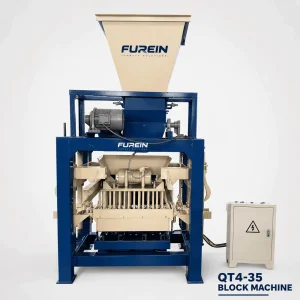
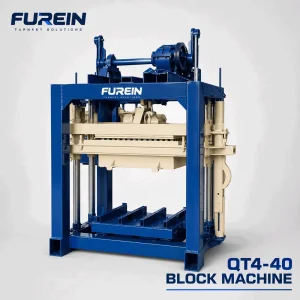
If you are starting a small block factory, supplying a local construction market or testing the business before making a larger investment, a simple production setup may be sufficient.
Solution 2: Growing Commercial Hollow Block Factory
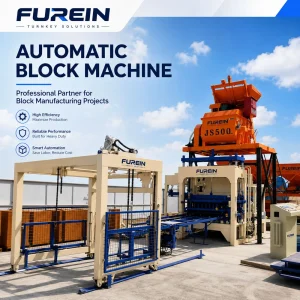
As hollow block sales increase, the production bottleneck may gradually move away from the block machine itself. Workers may spend too much time batching materials, loading the mixer or transporting fresh blocks. In this situation, you may not need to replace every machine. Instead, selected processes can be upgraded. If you already have a suitable mixer, loader or forklift, tell us.

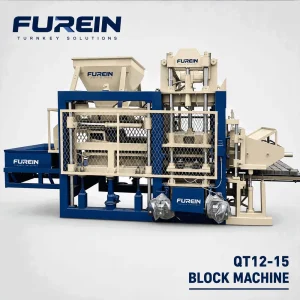
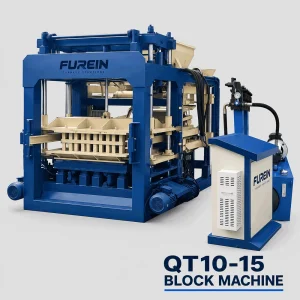
Hollow Block Mold: One Machine Can Produce Different Sizes
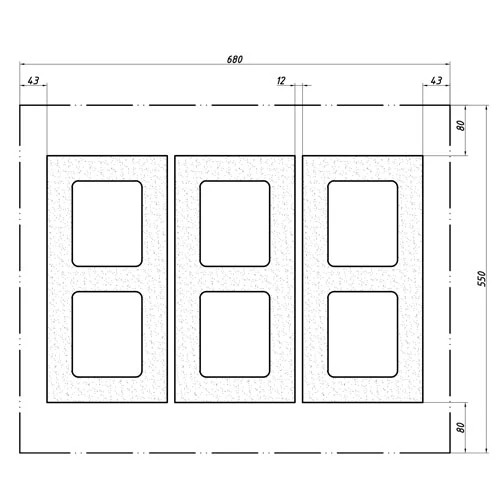
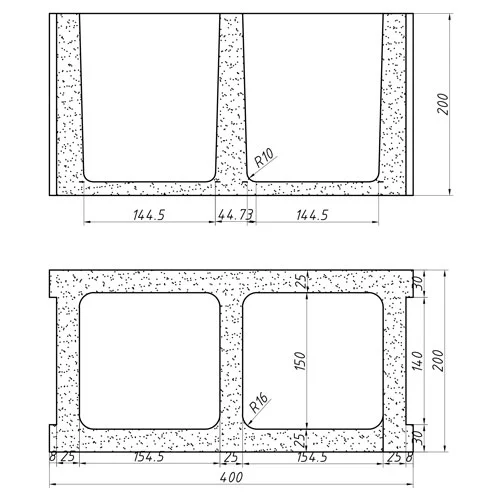
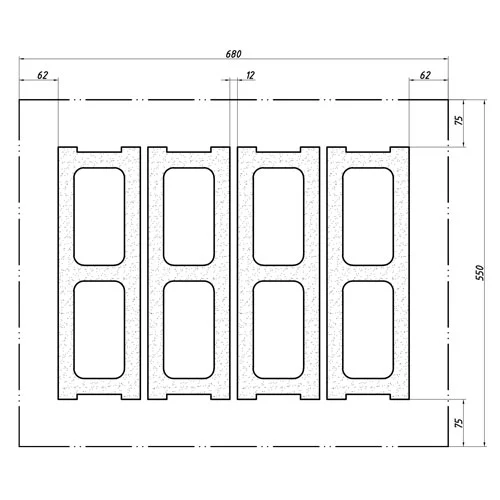
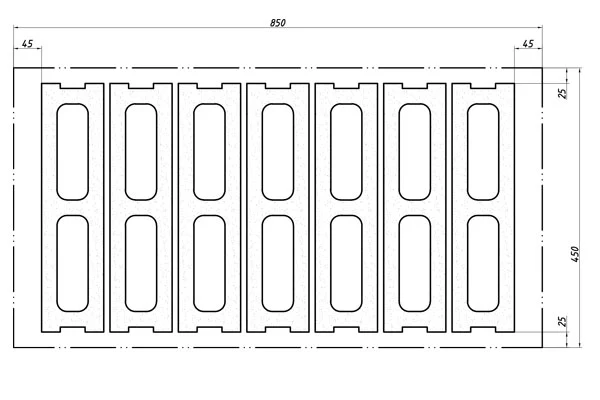
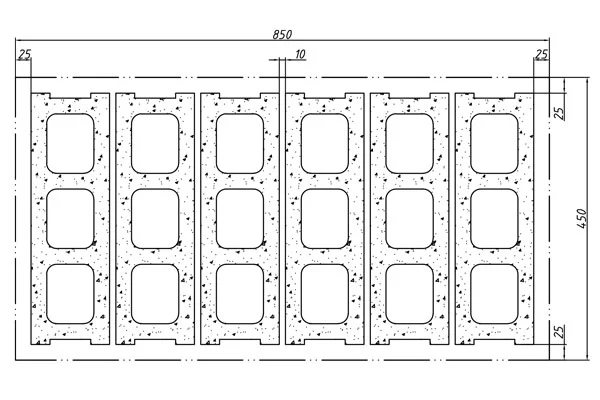
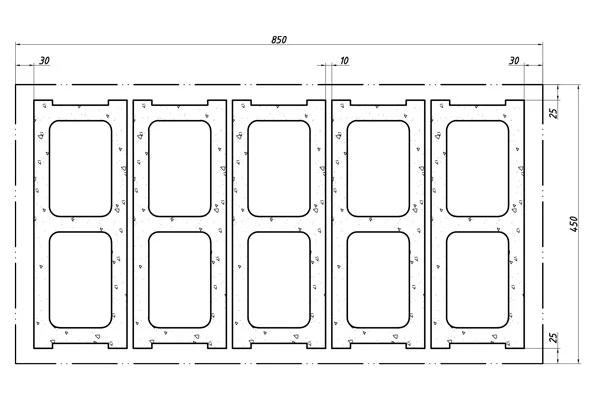
For many buyers, the hollow block mold is just as important as the machine. The mold determines: block dimensions, hole arrangement, external shape, number of blocks formed per cycle. Changing the mold allows one suitable block machine to produce different block sizes.
However: Changing the mold does not mean every block size has the same capacity. The mold layout changes with block dimensions. For this reason, when requesting a quotation, send us all the hollow block sizes you plan to produce.
How Much Does a Hollow Block Making Machine Cost?
There is no useful single hollow block making machine price without first confirming what is included. One hollow block making machine quotation may contain only the block machine. But another quotation may include a whole hollow block production line. This is why two hollow block machine prices can look very different even when both suppliers describe them as “hollow block machines.”The lowest machine price is not always the lowest complete factory investment.
Before comparing price, compare the actual configuration with hollow block making machine manufacturer:
- What is included?
- What is still manual?
- Are molds included?
- Are pallets included?
- Do I need another mixer or batching system before production can start?
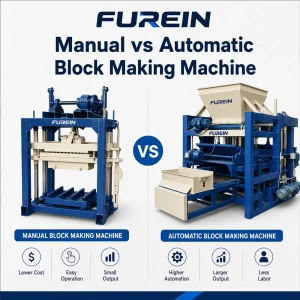
Manual vs Automatic Hollow Block Machine
Do not choose only according to your budget. Also consider labor. If labor is inexpensive and daily production is limited, a manual hollow block making machine may provide a simpler way to start. If labor cost is high, production is larger and workers spend too much time on repeated feeding and handling, more automation may reduce long-term operating pressure.
There is no advantage in paying for automation that your current factory does not need. But it is also worth avoiding a line that becomes too small as soon as your sales grow.
Keep reading the left article, it will help you how to choose between manual and automatic hollow block machine.
Common Hollow Block Production Problems
Why Do Hollow Blocks Break After Demolding?
First check the material condition. Possible causes may include excessively dry material, unsuitable particle grading, poor mold filling or insufficient compaction. Cement dosage and the raw-material formula should also be checked. Do not immediately change the mold or replace machine parts before identifying whether the problem comes from the material or machine.
Why Are Hollow Block Corners Broken?
Broken corners may occur when material does not fill the mold evenly, moisture is unsuitable or the fresh block does not have enough green strength. Check whether the problem appears in the same mold position every cycle. If it is always in the same cavity, the feeding or mold condition deserves more attention. If the problem appears randomly across many blocks, raw-material consistency should also be checked.
Why Are Hollow Blocks Too Weak?
Low strength can result from several different factors. Please check cement amount, cement quality, aggregate grading, mixing, compaction and curing. Increasing hollow block making machine pressure alone will not solve every block-strength problem.
Why Do Hollow Blocks Stick to the Mold?
Possible factors include inconsistent material feeding, changing raw-material moisture, uneven mold filling and unstable production conditions. Check whether the hollow block material entering every cycle is reasonably consistent.
Why Does the Hollow Block Machine Not Reach the Expected Output?
Find out where the hollow block making machine is waiting. Is it waiting for mixed material? or is manual feeding too slow? or are fresh blocks not being moved away quickly enough? or are pallets not returning in time? Production capacity belongs to the complete hollow block manufacturing plant, not just the main machine.
Can a Hollow Block Machine Also Make Solid Blocks and Pavers?
In many cases, a suitable block machine can produce different concrete products by changing molds. However, do not assume that changing a mold is the only difference. Different products may have different requirements for, like mixer design, block height, surface quality and production cycle,etc.
For example, a customer mainly producing building hollow blocks may have different material and production priorities from a customer mainly producing paving blocks. If several products are part of your business plan, tell us before we configure the production line.
Can the Hollow Block Production Line Be Expanded Later?
Yes, it can. A block production line can be configured in modules. For example, you may start with manual material loading and later add an automatic aggregate batcher. You may initially use manual pallet transfer and later add more automatic block handling equipment. If you already expect production to increase in the future, tell us during the initial layout stage. We can then consider equipment position, material flow and space for future expansion.
How many hollow blocks can a machine produce per day?
Daily production depends on the hollow block size, blocks per mold cycle, cycle time, mixer capacity, material feeding, pallet handling and actual working hours.